
Last updated: October 18, 2026
An LED display is self-emissive: the lit segments or pixels produce the light. An LCD does not emit light itself; it controls a backlight or ambient light. Start from what the user must read, the viewing distance and the ambient light.
| Item | LED display | LCD |
|---|---|---|
| Light source | Self-emissive: the lit segments or pixels produce the light | Does not emit light; controls a backlight, reflector or ambient light |
| Appearance clue | A segmented LED lights only the selected segments | A backlit LCD often shows a panel-wide lit background |
| Best for | Fixed digits and icons, bright ambient light, long viewing distance, custom shapes | Photographs, menus, animation, dense variable text (color LCD) |
| Custom tooling | Typically several hundred thousand NT dollars | Custom TFT LCD typically runs into the millions of NT dollars |
First, tell the two apart
LED and LCD modules can look alike from the front, but they generate and control light differently. The main article does not treat every product with the word “LED” as the same: a segmented LED module, an LED matrix and an LED-backlit LCD are different constructions. It gives a two-step check: first see whether the active area is a full rectangular image or only defined digits and icons, then inspect the unlit area and light source.
Know the LED display types
Common LED display types are 7-segment, alphanumeric, icon/bar, mixed-type and dot-matrix. To see what each type can show, start with these.
- Using LEDs to display information! The four most common types
- How Dot-Matrix Displays Show Digits, Letters, and Pixel Graphics
- 7-Segment LED Displays (product list)
- LED Dot-Matrix Displays (product list)
Newer technology: MiniLED, MicroLED and traditional LED displays
MiniLED and MicroLED share a similar light-emitting structure with traditional LED displays, and one article compares LCD, LED, OLED, Mini-LED and Micro-LED. It states that standard LED displays cost less, and that for custom shapes the one-time engineering cost (NRE) is clearly lower than for LCD, MiniLED and MicroLED. Custom TFT LCD tooling typically runs into the millions of NT dollars, while custom LED display tooling is typically several hundred thousand NT dollars.
Real products: elevator floor displays and two LCD replacement cases
Elevator floor indicators are the clearest comparison: the blog collects monochrome, black-and-white and full-color LCD examples next to many LED dot-matrix, 14-segment, 16-segment and 7-segment ones, so you can see which technology each product uses. A second article uses two market cases to show why a custom LED display can replace an LCD.
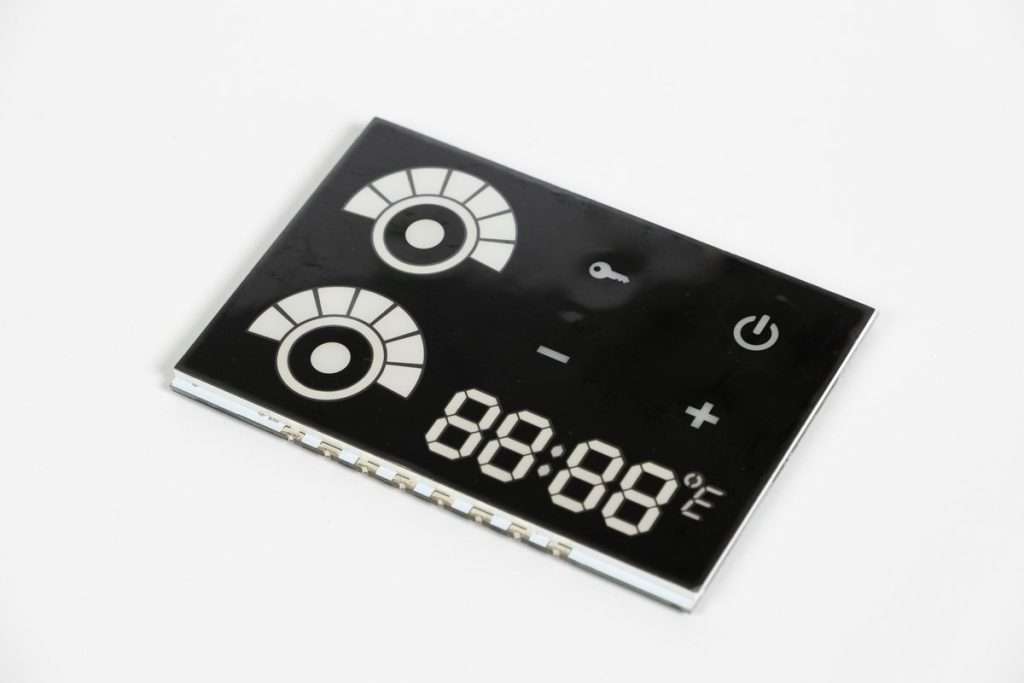
- LCD vs. LED for Elevator Floor Displays
- Why Custom LED Displays Are a Good LCD Replacement: Two Case Studies
Thinking of replacing an LCD with an LED display? Request a quote with what the display needs to show, and the OPTO PLUS LED engineering team will check whether a standard LED part can do it.
Standard or custom, and how to control cost
After choosing LED, the next questions are whether a standard part is enough and how emitting color and level of customization affect cost.
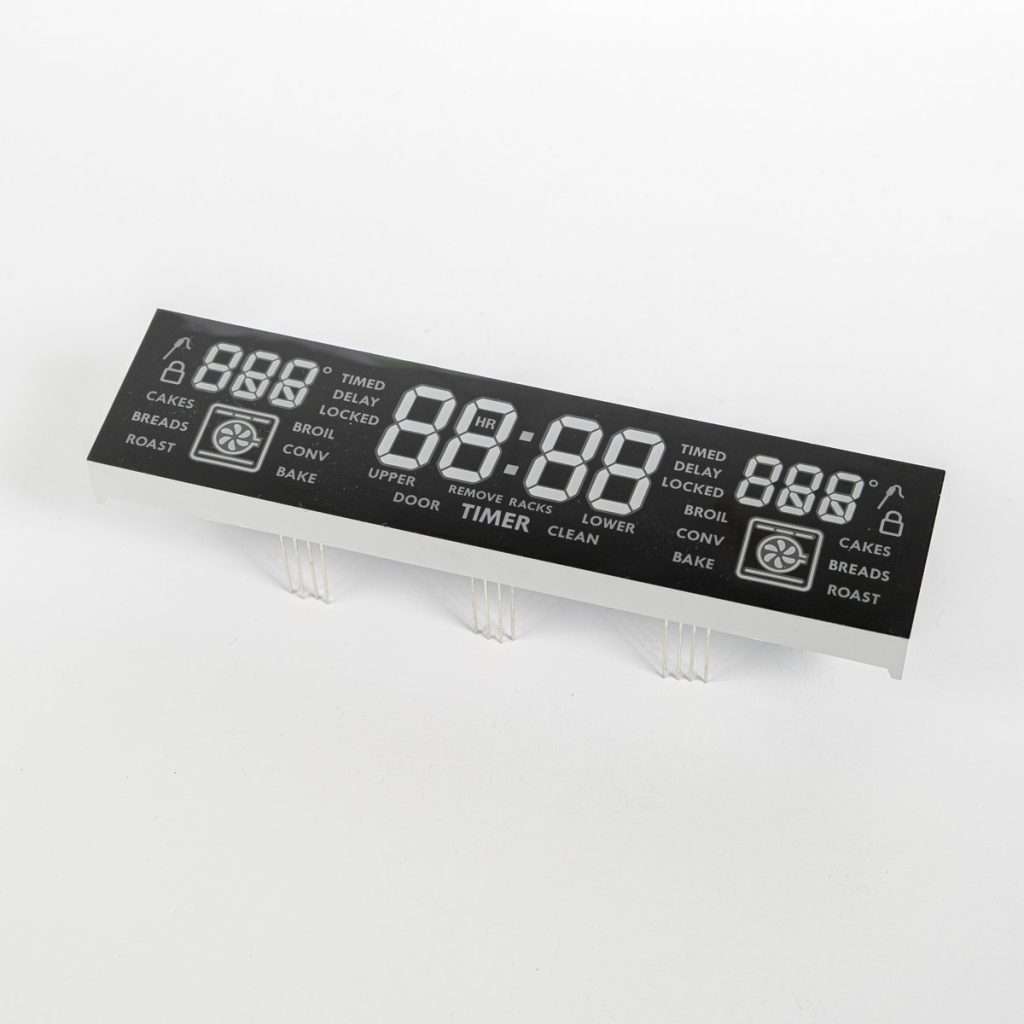
- Standard or Custom LED Display: How to Choose
- How to Choose the Lowest-Cost LED Color for Your Product
- Custom LED Display
- RGB LED Display (product list)
Next step
Our advice: list what the user must read, the viewing distance, ambient light, available space, power budget, driver interface, operating temperature and target cost, then decide the technology; bring that list to the quote request and the first round goes fastest.
Related guides: 7-Segment Display Guide · Custom LED Display Process · SMD & THT Package Guide
FAQ
An LED display is self-emissive: the lit segments or pixels produce the light. An LCD’s liquid-crystal layer does not emit light; it controls light from a backlight, reflector or the environment. So a segmented LED module lights only the selected segments, while a backlit LCD often shows a panel-wide lit background when unlit. These are clues only; the part-number datasheet is the final reference.
Start from the requirements: a color LCD suits photographs, menus, animation or dense variable text, while an LED display usually has the edge for fixed digits and icons, bright ambient light, long viewing distance or custom shapes. The final choice still depends on space, power, driver interface, temperature and target cost. OPTO PLUS LED can help evaluate against your specification. Operating temperature and lifetime follow each part’s datasheet; parts with an integrated IC vary more.
The OPTO PLUS LED article states that the one-time engineering cost (NRE) of a custom LED display, especially for irregular shapes or special colors, is clearly lower than for LCD, MiniLED and MicroLED. Custom TFT LCD tooling typically runs into the millions of NT dollars, while custom LED display tooling is typically several hundred thousand NT dollars; MOQ is typically 1,000-10,000 pcs, quoted per part number, and final amounts follow the quote.
Reviewed by the OPTO PLUS LED Engineering Department.